A damaged or weakened tooth does not always mean extraction. Dental crowns are one of the most effective restorative solutions available — custom-fitted tooth-shaped caps that cover the entire visible portion of a tooth to restore its strength, shape, function, and appearance. For Dock Junction residents dealing with cracked, decayed, or heavily damaged teeth, Satilla Family Smiles offers dental crown placement just minutes away at 48 Candler Drive, Suite 100 in Brunswick.
Dr. Bailey Sisler and our team provide thorough evaluations to determine whether a dental crown is the right solution for each patient’s specific situation. Dock Junction is located along the Highway 341 corridor north of our South Brunswick office, making it one of the most convenient commutes in Glynn County for patients seeking restorative dental care. As part of the communities we serve throughout the area, Dock Junction patients receive the same comprehensive, attentive care that has made our practice a trusted dental home in Glynn County for more than a decade.
10–15 Yrs
Average lifespan of a well-maintained dental crown
2 Visits
Typical number of appointments for crown placement
All Ages
Crown treatment available for adult patients
7 a.m.
Early appointments available Mon – Thurs
When Is a Dental Crown Needed?
Dr. Sisler evaluates each tooth on its individual merits before recommending a crown. Crowns are one of the most versatile tools in restorative dentistry, and they are recommended when the damage or deterioration to a tooth is significant enough that a filling alone cannot adequately restore its structure and function.
Common reasons a dental crown may be recommended include the following.
Severely decayed teeth — When decay has compromised too much of the natural tooth structure for a filling to be reliable, a crown restores full coverage and protection.
Cracked or fractured teeth — A crown holds a cracked tooth together, preventing the crack from spreading further and protecting the nerve.
Broken or worn-down teeth — Teeth that have broken, chipped significantly, or worn down from grinding can be restored to their original size and shape with a crown.
After root canal treatment — A tooth that has undergone root canal therapy is more brittle and vulnerable. A crown protects it from fracture and restores full biting function.
Supporting a dental bridge — Crowns are placed on the teeth adjacent to a gap to anchor a dental bridge in position.
Covering a dental implant — A crown placed on top of a dental implant post replaces a missing tooth with a natural-looking, fully functional result.
Cosmetic improvement — Severely discolored, misshapen, or disproportionate teeth can be covered with a crown when other cosmetic options are not suitable.
Not every damaged tooth requires a crown. Dr. Sisler will discuss all viable options with you and explain her clinical reasoning before any treatment plan is finalized.
Types of Dental Crowns We Place
Crown materials differ in strength, appearance, and ideal placement location. The American Dental Association recognizes several categories of crown materials, each with distinct clinical characteristics, longevity profiles, and indications. At Satilla Family Smiles, we match the crown material to your specific tooth, bite, and aesthetic goals.
Porcelain-Fused-to-Metal (PFM)
A metal substructure covered with tooth-colored porcelain. PFM crowns combine durability with a natural appearance and are a well-established option for both front and back teeth. Metal-ceramic crowns have a reported ten-year survival rate of approximately 97%, making them a time-tested choice for patients who want strength without sacrificing aesthetics.
All-Ceramic / All-Porcelain
The most natural-looking option, with no metal component. All-ceramic crowns are ideal for front teeth where appearance is the priority. Advances in materials like lithium disilicate have made them significantly stronger and more durable than earlier generations of all-ceramic restorations.
Zirconia
Zirconia crowns are extremely strong and increasingly translucent, making them suitable for both anterior and posterior teeth. They are a popular choice for back teeth that endure the most biting and chewing forces, and they are highly biocompatible with minimal risk of sensitivity or allergic reaction.
The Dental Crown Procedure at Satilla Family Smiles
Most dental crown placements at our practice follow a straightforward two-visit process. We walk every patient through each step in advance so there are no surprises on the day of treatment.
Consultation and Examination — Dr. Sisler examines the tooth, reviews your dental and medical history, and takes digital X-rays. This helps confirm that the tooth and its supporting bone are healthy enough to support a crown, and rules out any underlying issues — such as infection — that would need to be addressed first.
Tooth Preparation — The tooth is numbed with local anesthesia. Dr. Sisler reshapes the outer surfaces of the tooth to create room for the crown. If significant tooth structure has been lost, she may build the tooth up with filling material first to create a stable foundation. The amount of tooth structure removed depends on the crown material selected.
Impressions and Temporary Crown — Digital or physical impressions of the prepared tooth are taken and sent to a dental laboratory. A temporary crown is placed to protect the prepared tooth and maintain your bite while the permanent crown is fabricated — typically a two-week turnaround.
Permanent Crown Placement — At your second appointment, the temporary crown is removed and the permanent crown is tried in to verify fit, bite, and color match. Once Dr. Sisler and you are both satisfied, the crown is permanently bonded to the tooth.
Final Check and Aftercare Instructions — Dr. Sisler reviews bite alignment and provides aftercare guidance so your crown functions comfortably from day one. Minor sensitivity in the days following placement is normal and typically resolves quickly.
Ready to Restore Your Tooth?
Dock Junction patients are just a short drive from our 48 Candler Drive office. We offer early morning appointments starting at 7 a.m. Monday through Thursday so treatment fits into your schedule without disruption.
A dental crown protects your tooth, but the tooth underneath and the gum tissue surrounding it still require consistent at-home care. Plaque and bacteria can accumulate at the margin where the crown meets the gumline, making brushing and flossing just as important as before treatment.
Brush twice daily with a soft-bristled toothbrush, floss carefully around the crown each day, and keep your regular dental exams and cleanings on schedule. If you grind your teeth at night, let Dr. Sisler know — a custom night guard can protect your investment and extend the life of your crown significantly.
MEET YOUR DENTIST
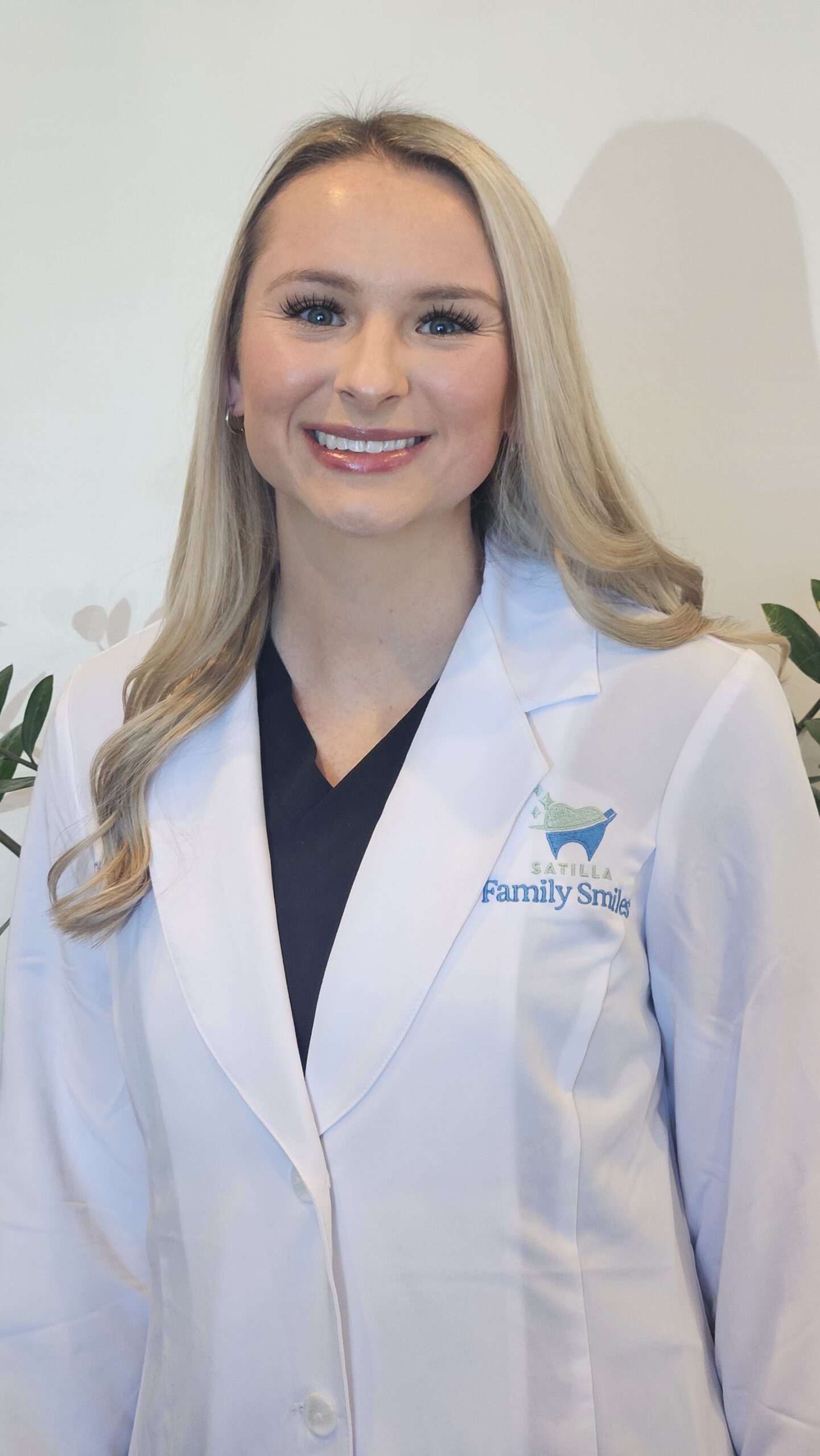
Dr. Bailey Sisler, DMD
Dr. Sisler earned her Doctor of Dental Medicine from the University of Pittsburgh School of Dental Medicine, along with a Master of Science in Biomedical Science and a Bachelor of Science in Biology (Magna Cum Laude) from the University of Pittsburgh. She is an active member of the American Dental Association and stays current with modern dental techniques to ensure every patient receives comfortable, effective care.
Restorative dental care should not be out of reach because of insurance status. Satilla Family Smiles offers an in-house Elite Dental Savings Plan that provides meaningful cost relief on both routine and restorative treatment — including a 20% discount on procedures such as dental crowns for adult members.
Elite Dental Savings Plan — Adult Standard
$349/year — our in-house membership for patients without dental insurance.
2 dental exams per year
2 professional cleanings per year
2 fluoride treatments included
Bitewing X-rays included
Complimentary whitening trays
20% discount on all additional treatment, including crowns
No deductibles, no waiting periods, no claim forms
We want treatment costs to be manageable. For patients who need financing options for crown treatment, we offer:
CareCredit financing accepted
Cherry financing accepted
Flexible low monthly payment options
Ask our team about the plan that fits your budget
Why Dock Junction Patients Choose Satilla Family Smiles
Dock Junction sits just north of our South Brunswick practice along the Highway 341 corridor — a quick, straightforward commute that removes one barrier to getting treatment done in a timely way. When a tooth needs a crown, delaying treatment rarely improves the situation. Cracks can extend, decay can spread, and what begins as a manageable restoration can become a more complicated procedure over time. Our early morning hours starting at 7 a.m. Monday through Thursday mean patients can often get in for their first visit — or their permanent crown placement — without taking a full day away from work.
Dr. Bailey Sisler takes a patient-first approach at every appointment. She explains what she finds, walks through your options clearly, and makes sure you understand the recommendation before any work begins. You can learn more about her background and philosophy on the Meet Dr. Bailey Sisler page. If you are ready to address a damaged tooth or have questions about whether a crown is the right next step, schedule an appointment online and our team will follow up to confirm your visit.