

Medically Reviewed by Dr. Bailey Sisler, DMD on September 22, 2026
The best option for your smile depends on one simple distinction. A dental crown protects and restores a damaged but still present tooth, while a dental bridge replaces one that has been lost. Both are proven, durable restorations, but they are designed to solve two very different problems, and choosing the right one makes all the difference for your long-term oral health.
For more than a decade, patients throughout the Golden Isles have trusted Satilla Family Smiles for comprehensive restorative dental services for all ages. Dr. Bailey Sisler brings a genuine patient-first philosophy to every appointment, taking the time to evaluate your specific needs and guide you toward the solution that best supports your smile and long-term oral health.
The Difference Between Dental Crowns and Bridges
A dental crown and a dental bridge may both fall under the category of restorative dentistry, but they serve distinct purposes and are recommended in different situations. Knowing the basics of each can help you walk into your consultation prepared and confident.
What Is a Dental Crown?
A dental crown is a custom-made cap placed over the entire visible portion of a tooth above the gumline. It restores the shape, strength, and appearance of a tooth that has been cracked, weakened, heavily decayed, or treated with a root canal. Crowns are also placed on top of dental implants to replace a missing tooth entirely. Common materials include porcelain, ceramic, zirconia, and porcelain fused to metal, each offering a different balance of strength and a natural appearance, and your provider will recommend the material that fits your bite and where the tooth sits in your smile.
What Is a Dental Bridge?
A dental bridge is used to replace a missing tooth rather than protect an existing one. It consists of one or more artificial teeth, called pontics, anchored in place by crowns on the healthy teeth on either side of the gap. The result is a fixed, non-removable restoration that fills the empty space, restores your bite, and prevents neighboring teeth from shifting out of position. According to tooth loss data from the National Institute of Dental and Craniofacial Research, adults ages 20 to 64 have an average of 25.5 remaining teeth, underscoring how common tooth loss is and why timely treatment matters.
Most patients are candidates for a traditional bridge, which uses crowns on both sides of the gap. When only one side has a healthy supporting tooth, a cantilever design anchors the bridge from a single side instead. Patients who prefer not to alter healthy adjacent teeth may be better suited to an implant-supported bridge, which anchors to a dental implant rather than to natural teeth.
What the Treatment Process Looks Like
Getting a crown typically takes two visits. During the first, the tooth is reshaped to make room for the crown and an impression or digital scan is taken, then a temporary crown protects the tooth while the permanent one is custom-made. At the second visit, the finished crown is checked for fit and cemented into place. A bridge follows a similar pattern, except the teeth on both sides of the gap are prepared for supporting crowns before the connected bridge is placed and secured.
Which Option Is Right for Your Situation?
Choosing between a crown and a bridge comes down to one key question. Is the tooth still present in your mouth, or is it gone entirely?
When a Crown Is the Better Choice
A crown is typically recommended when the tooth is still present but has been significantly damaged or weakened. Common reasons to consider a crown include severe decay that is too extensive for a standard filling, a cracked or fractured tooth, a tooth with a large existing filling that needs more support, or a tooth following root canal therapy. A crown reinforces what remains of your natural tooth structure, extending its lifespan while protecting it from further damage.
When a Bridge Is the Better Choice
A bridge becomes the preferred solution when a tooth is completely absent and cannot be saved. The gap left by a missing tooth creates real problems over time, as neighboring teeth can tilt or drift, the opposing tooth may over-erupt, and your bite may become uneven. These shifts can lead to discomfort, difficulty chewing, and increased wear on surrounding teeth. As your family dentist, we evaluate all of these factors together before making a recommendation to ensure the best long-term outcome for your smile.
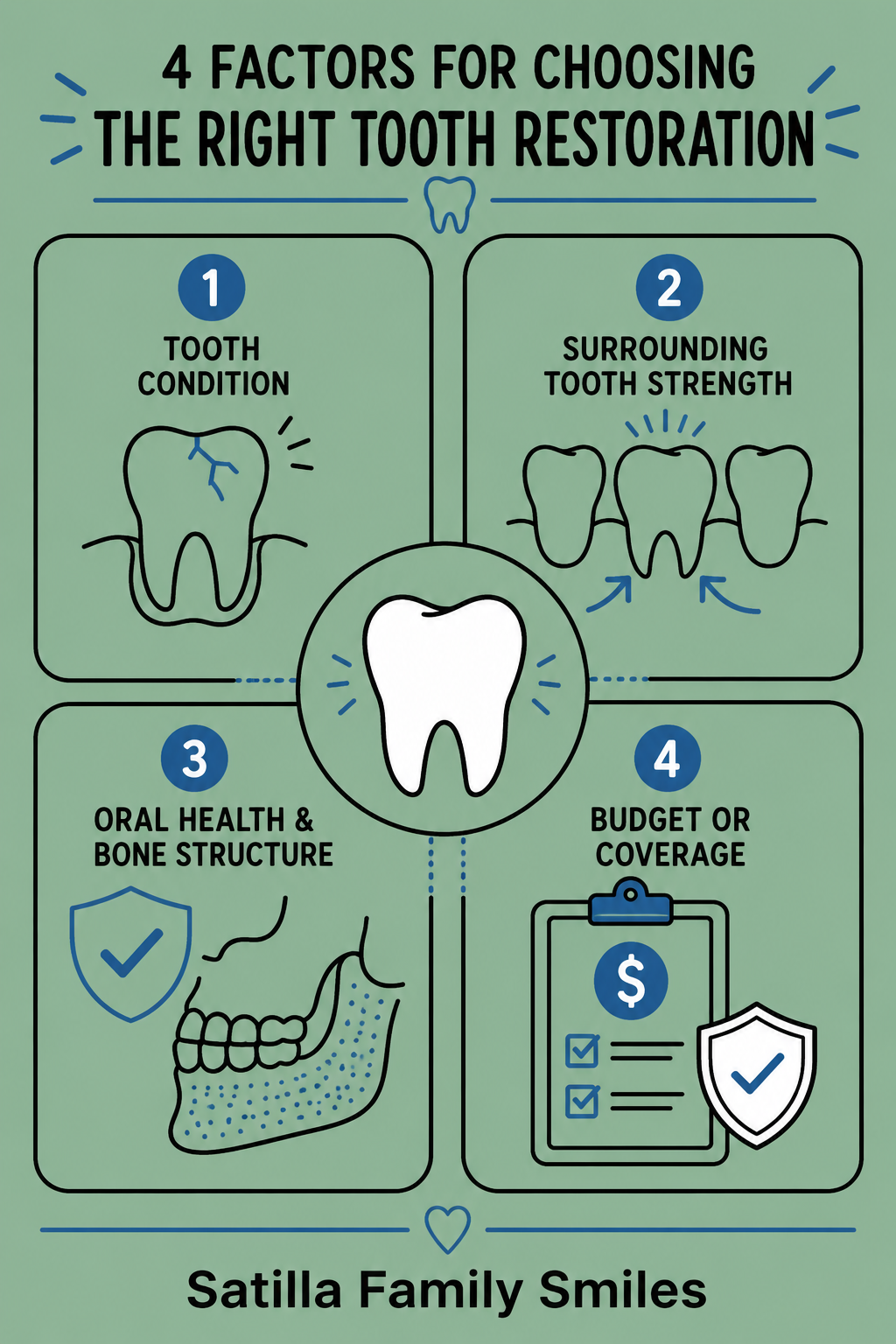
There are several factors to weigh when evaluating your restorative options:
- The current condition of the tooth, present but damaged versus fully missing
- The health and strength of the adjacent teeth that would support a bridge
- Your overall oral health, bone structure, and candidacy for implants
- Budget and coverage, including our Elite Dental Savings Plan, Cherry, and CareCredit for patients without traditional insurance
Discussing these factors with your dental provider ensures you choose the treatment that delivers the most durable and comfortable result for your unique situation.
Cost and What Affects It
Crowns and bridges are priced differently because a bridge involves more than one tooth. A single crown generally costs less than a multi-unit bridge, since a bridge requires preparing and restoring the teeth on both sides of the gap in addition to the pontic that fills the space. Material choice, the number of teeth involved, and whether any additional treatment is needed beforehand all affect the final estimate, which is why every recommendation at our restorative dentistry practice starts with a clear, itemized plan before treatment begins.
Take the Next Step With Satilla Family Smiles
Dr. Bailey Sisler is an active member of the American Dental Association and brings compassionate, patient-centered care to every restorative procedure at Satilla Family Smiles. Our team is committed to providing comprehensive care in a warm, welcoming office with flexible scheduling and same-day appointment options to make care as accessible as possible. If you need a crown to protect a compromised tooth or a bridge to restore a missing one, we take the time to walk you through your options clearly and thoroughly.
If you are ready to address a damaged or missing tooth, we invite you to schedule your appointment with the team at Satilla Family Smiles today. A healthier, more complete smile is well within reach.
Frequently Asked Questions About Dental Crowns and Bridges
How long do dental crowns and bridges typically last?
Well-maintained crowns and bridges commonly last ten to fifteen years or longer with good oral hygiene and regular checkups. Materials, bite forces, and how consistently you brush and floss around the restoration all affect how long it holds up.
Is a dental bridge or a dental implant better for a missing tooth?
Both are effective, proven options. A bridge anchors to the natural teeth on either side of the gap, while an implant stands on its own without altering neighboring teeth. Your bone structure, the health of the adjacent teeth, and your budget all factor into which option your dentist recommends.
Does getting a bridge require reshaping healthy teeth?
Yes, in a traditional bridge, the teeth on either side of the gap are reshaped to support the crowns that anchor the bridge in place. Patients who prefer to avoid altering healthy teeth may be better candidates for an implant-supported bridge instead.
What happens if a missing tooth is left untreated?
Neighboring teeth can tilt or drift into the empty space, the opposing tooth may over-erupt, and your bite can become uneven over time. These shifts often lead to discomfort, difficulty chewing, and additional wear on the teeth that remain.
Will my dental insurance help cover a crown or bridge?
Many dental plans classify crowns and bridges as major restorative work and cover a portion of the cost when the treatment is medically necessary. Our Elite Dental Savings Plan, along with CareCredit and Cherry financing, offers additional options for patients without traditional insurance.
About the Author
Dentist, Satilla Family Smiles
Dr. Bailey Sisler is a triple alumna of the University of Pittsburgh, where she earned her Doctor of Dental Medicine, a Master of Science in Biomedical Science, and a Bachelor of Science in Biology graduating Magna Cum Laude. She is an active member of the American Dental Association and has provided volunteer dental care to underserved communities in Pittsburgh and Jamaica.